
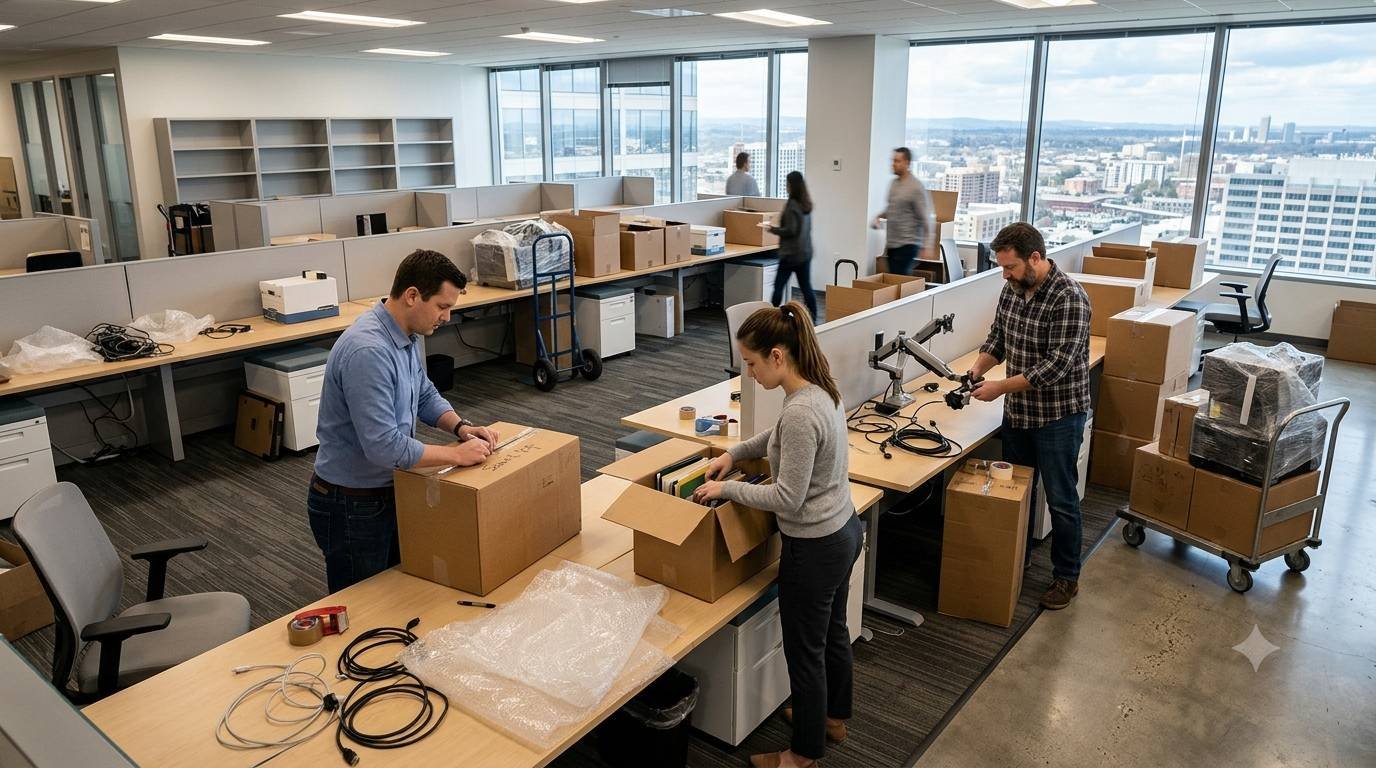
Office clearance is often treated as the final task in a refurbishment, relocation, or closure. But, it can have a surprisingly big impact on how smoothly the whole process runs. Furniture, IT equipment, paperwork and general office waste can quickly accumulate, especially when a business has occupied a space for several years.
Whether you are downsizing, moving premises, or preparing a building for its next occupier, having a clear plan can make the process considerably easier.
Start With An Inventory
Before anything is moved, establish exactly what needs to go. Office furniture can include desks, chairs, meeting tables, storage units, reception furniture, and kitchen equipment, while technology may include monitors, computers, printers, and networking equipment.
Separate items into categories such as reuse within the business, sell or donate, recycle, and dispose of. This prevents useful furniture from being thrown away unnecessarily and can make the clearance itself more efficient.
It’s also worth checking whether any equipment contains sensitive business information. Computers, hard drives and paperwork should be handled properly before leaving the premises. Sometimes, deleting files simply isn’t enough, so it’s important to be safe.
Consider What Happens To Furniture
Office furniture is often bulky, heavy, and awkward to transport. A single desk might not seem like a major issue, but clearing an entire floor can involve dozens, or even hundreds of individual items. If furniture is still in reasonable condition, consider whether it could be reused elsewhere.
Donating suitable items to charities or community organisations may be an option, or you could sell it if you want to. But, where disposal is unavoidable, recycling should be considered where practical. Materials such as metal, wood, and some plastics may be able to be recovered.
For larger clearances, working with an experienced office clearance company London can take much of the logistical issues away from the internal team. This can be helpful when a business needs a whole workplace cleared within a specific amount of time.
Plan Around The Building
Office clearance isn’t just about what leaves the building, it’s also about how it gets out. Check lifts, staircases, loading areas and access restrictions before scheduling any work. In busy city locations, parking and delivery access may need to be arranged prior to the time of removal. Some buildings also have specific rules around working hours and lift usage, so check this. Also, make sure you give the clearance team this information beforehand.
Make Office Clearance Part Of The Plan
The best time to think about clearance is before the last day in the office. By deciding what can be reused, recycled, or securely disposed of, and arranging suitable collection and transport, businesses can avoid turning clearance into a rushed final job.
Whether you’re closing a small office, relocating a growing company, or preparing a large commercial space for refurbishment, a structured approach makes the process a whole load easier to manage.
A well planned office clearance doesn’t just remove unwanted items. Instead, it leaves the space ready for whatever is going to come next.